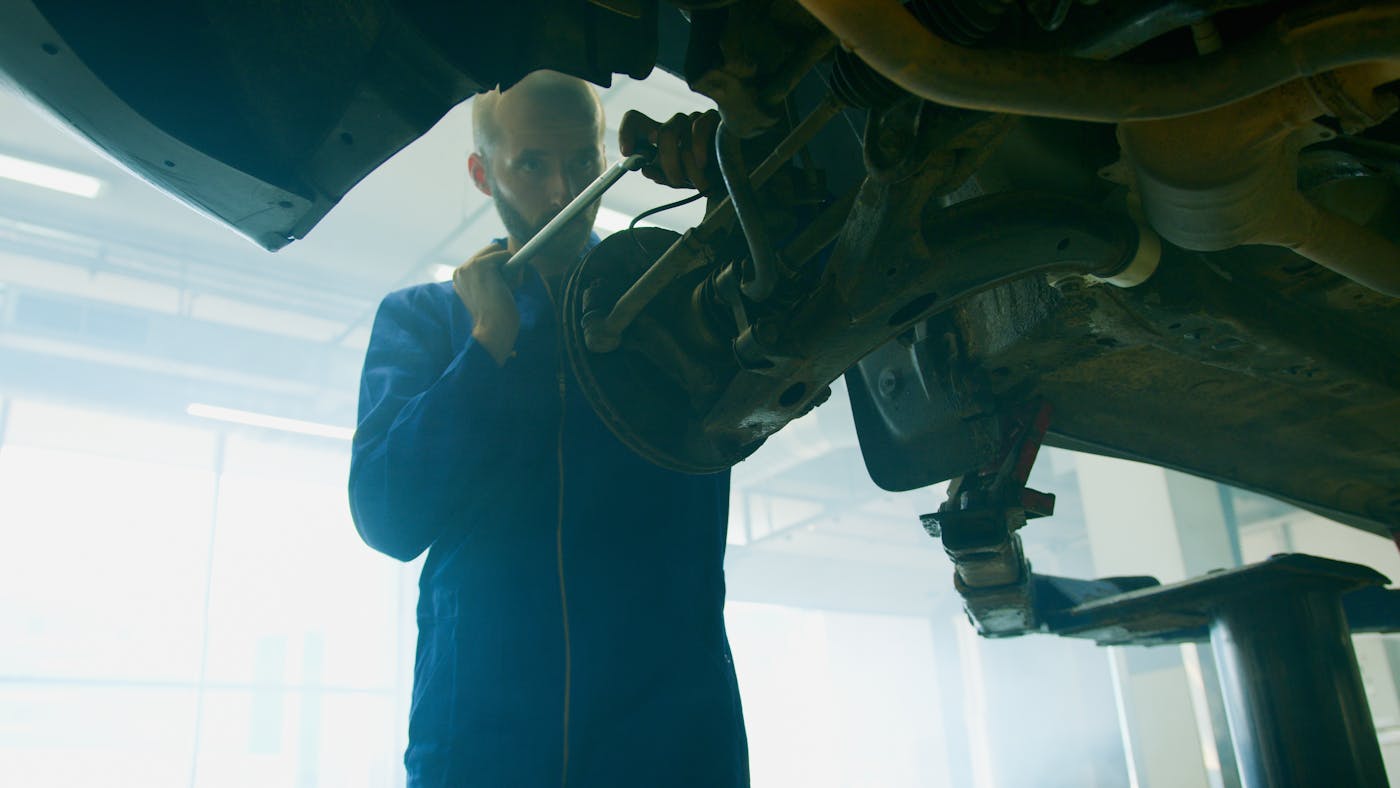
Brakes don't fail without warning. They give you signs — sounds, feelings, and behaviors — well before they become dangerous. The problem is that most people don't know what those signs mean, so they keep driving until a small repair turns into a big one. Here are six warnings we see every week at our shop, what causes each one, and what it'll cost to fix.
1. Squealing or Squeaking When You Brake
This is the most common early warning. Most brake pads have a small metal tab called a wear indicator. When the pad material wears down to about 2-3mm, this tab contacts the rotor and produces a high-pitched squeal. It's designed to be annoying. That's the point — it's telling you the pads are getting low.
At this stage, you typically only need new pads. The rotors are usually still in good shape. This is the cheapest time to address it. Wait too long and that squeal turns into the next sign on this list.
Typical cost: $150-$300 per axle for pad replacement.
2. Grinding Noise When Braking
Grinding means you've gone past the wear indicators. The pad material is gone and the metal backing plate is now pressing directly against the rotor. Metal on metal. Every time you brake, you're cutting grooves into the rotor surface.
Once you hear grinding, you're looking at pads and rotors. In some cases, if you've been grinding for a while, the caliper bracket or the caliper itself can get damaged. What would have been a $250 pad job is now a $400-$600 brake job. We see this all the time — a week of grinding can double the repair cost.
Typical cost: $300-$600 per axle for pads and rotors.
3. Vibrating or Pulsating Brake Pedal
If the brake pedal pulses or vibrates under your foot when you press it, you likely have warped rotors. Rotors are the flat metal discs that the brake pads squeeze against. Heat from heavy braking — like coming down a steep hill or stop-and-go traffic on I-440 during rush hour — can cause uneven thickness in the rotor surface.
You might also feel this vibration in the steering wheel, especially if the front rotors are the ones affected. Warped rotors can sometimes be resurfaced (machined smooth) if there's enough material left, but often replacement is the better long-term fix. Resurfacing buys time but leaves you with thinner rotors that warp again sooner.
Typical cost: $200-$400 per axle for rotor replacement. Resurfacing: $100-$200 if applicable.
Hearing Something From Your Brakes?
Don't wait for grinding. We'll inspect your pads, rotors, and calipers and give you a straight answer on what needs to happen now and what can wait.
Call (984) 254-56424. Soft or Spongy Brake Pedal
A healthy brake pedal should feel firm and responsive. If it feels soft, spongy, or sinks closer to the floor than usual, something is wrong in the hydraulic system. Common causes include:
- Air in the brake lines — air compresses, fluid doesn't. Air bubbles make the pedal feel mushy. A brake fluid flush and bleed fixes this.
- Brake fluid leak — check under the car near the wheels and around the master cylinder for wet spots. A leak means you're losing hydraulic pressure.
- Failing master cylinder — the master cylinder converts pedal pressure into hydraulic force. When it fails internally, the pedal goes soft or sinks to the floor.
This one is more urgent than squealing or vibration. A soft pedal means your stopping power is reduced. If the pedal goes to the floor, you could lose braking ability entirely. Get this checked immediately.
Typical cost: Brake fluid flush: $100-$150. Master cylinder replacement: $300-$500. Brake line repair: $150-$300.
5. Car Pulls to One Side When Braking
If your car veers left or right when you hit the brakes, it usually means one side is gripping harder than the other. The most common cause is a stuck or seized brake caliper. The caliper is what pushes the pads against the rotor. When one sticks, it either drags constantly or doesn't release properly.
Other causes include uneven pad wear, a collapsed brake hose (it lets fluid in but not back out), or contaminated brake fluid on one side. It's worth noting that pulling can also be caused by suspension or alignment issues, so proper diagnosis matters before replacing parts.
Typical cost: Caliper replacement: $200-$400 per side. Brake hose replacement: $100-$200.
6. Brake Warning Light on the Dashboard
Modern vehicles have a brake warning light (usually a red exclamation point inside a circle, or the word "BRAKE"). This light can mean:
- The parking brake is still engaged (check that first)
- Brake fluid level is low (possible leak)
- The ABS system has detected a fault
- Electronic brake pad wear sensors have triggered (common on European cars)
If the light is on and the parking brake is fully released, don't ignore it. Low fluid or a sensor fault both point to issues that affect stopping ability. This is especially important for a thorough brake inspection to figure out what tripped the warning.
Typical cost: Diagnosis: $0-$80. Repair depends on the cause.
How Long Do Brake Pads Actually Last?
There's no single answer because it depends heavily on how and where you drive. General ranges:
- City driving (Raleigh, stop-and-go): 25,000-40,000 miles
- Highway driving (I-40 commuters): 40,000-65,000 miles
- Aggressive driving or heavy vehicles: 15,000-25,000 miles
Raleigh drivers tend to fall on the shorter end because of traffic light density. If you drive Capital Blvd, Glenwood Avenue, or Six Forks Road daily, you're braking a lot more than someone cruising on I-40. Rear pads often last longer than fronts because the front brakes do about 70% of the stopping work.
Ceramic vs. Semi-Metallic Brake Pads
When it's time for new pads, you'll have two main options:
- Ceramic pads — quieter, produce less dust, last longer. Better for daily driving. They cost a bit more but are worth it for most Raleigh commuters.
- Semi-metallic pads — better heat dissipation, stronger bite. Good for trucks, towing, and vehicles that need aggressive stopping power. They're noisier and produce more dust.
We'll recommend the right pad type based on your vehicle and how you drive. There's no reason to put heavy-duty semi-metallic pads on a Honda Civic that never tows anything, and there's no reason to put quiet ceramic pads on a truck that hauls equipment every weekend.
The takeaway is simple: catch brake problems early and they're affordable. Wait for grinding or a soft pedal and the cost doubles or triples. If anything on this list sounds familiar, bring the car in. We'll inspect everything, tell you exactly where you stand, and let you decide what to do. While the car is on the lift for a brake inspection, we also check for exhaust leaks and muffler damage — it's easy to spot from underneath and saves you a separate trip. No pressure — just honest information from people who work on brakes every day.